
Staring at your first German word and feeling a little lost? You’re not alone. Almost everyone who starts from zero feels the same mix of excitement and nerves. The good news is that the best way to start learning German from zero isn’t complicated at all. It just needs the right steps, done in the right order. Germany is home to Europe’s largest economy, and German is spoken by over 100 million people across Europe, opening doors to study, jobs, and travel. This blog walks you through exactly how to begin, so you can skip the confusion and start speaking with confidence.
Why Learn German From Zero?
Learning a new language from scratch can feel scary, but German rewards you quickly once you get past the basics.
Career and Study Opportunities in Germany
Germany offers free or low-cost education at many public universities, and its job market actively welcomes skilled workers from abroad. Knowing German gives you a real edge, whether you’re applying to a university program or a company with German ties.
Is German Really That Hard?
Many beginners assume German is one of the toughest languages out there. In truth, English and German share the same language family, so you already know more words than you think (hallo, mutter, house/Haus). The grammar takes practice, but it’s learnable step by step.
7 Steps to Start Learning German as a Complete Beginner
1. Learn the Alphabet and Pronunciation First
German pronunciation is mostly consistent once you learn the rules. Start here before jumping into vocabulary, so words don’t feel like guesswork.
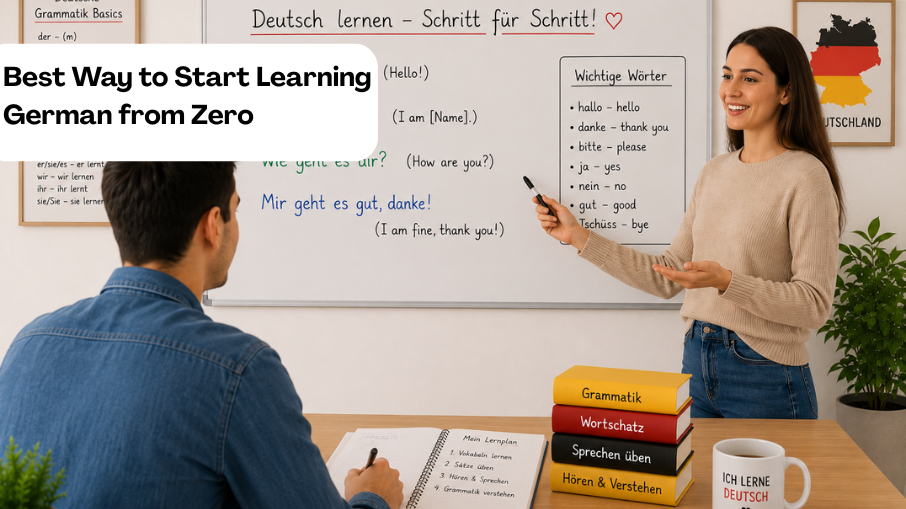
2. Master Everyday Greetings and Phrases
Simple lines like “Wie geht’s?” (how are you?) or “Ich heiße…” (my name is…) build early confidence and make the language feel real.
3. Build a Simple Grammar Foundation
Focus on basics: articles (der, die, das), simple verb endings, and word order. Don’t try to learn every rule at once.
4. Grow Your Vocabulary Daily
Learn 5-10 new words a day tied to real situations — shopping, greetings, food. Small, steady steps beat cramming.
5. Practice Listening Every Day
German podcasts, songs, or beginner-level shows train your ear to recognize sounds and rhythm, even before you understand every word.
6. Speak From Day One
Don’t wait until you feel “ready.” Say words out loud, talk to yourself, or practice with a partner. Mistakes are part of learning, not a sign of failure.
7. Follow a Structured Course Instead of Random Learning
Jumping between random apps and videos can slow you down. A structured A1 course gives you a clear path, so you’re not guessing what to learn next.
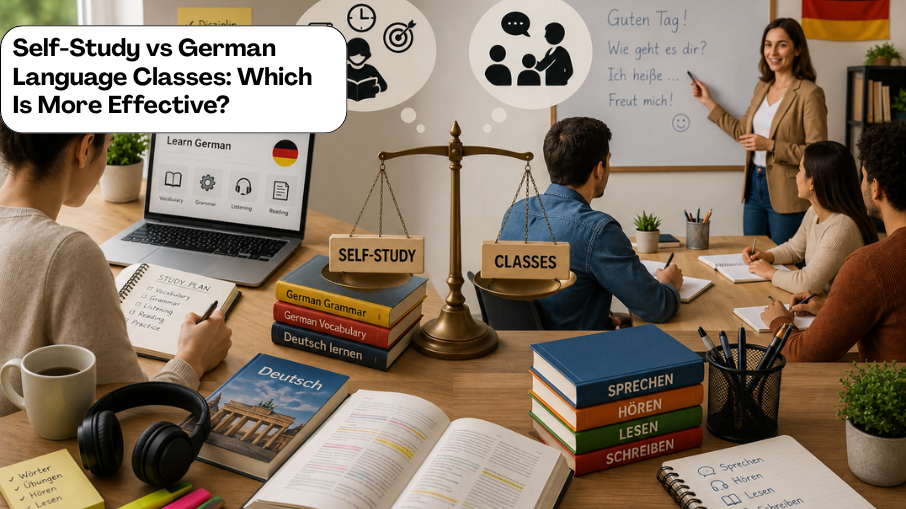
Self-Study vs. Joining a German Course — Which Is Better?
Learning Alone: Pros and Cons
Self-study is flexible and low-cost, but it’s easy to lose motivation or pick up wrong pronunciation habits without anyone to correct you.
Why Guided Learning Speeds Things Up
Learners in a structured class often reach a conversational A1-A2 level in a few months, while self-taught learners without guidance can take much longer simply because there’s no clear roadmap or feedback.
Common Mistakes Beginners Make
Skipping pronunciation basics and picking up bad habits early
Memorizing grammar rules without ever using them in real sentences
Avoiding speaking out of fear of sounding wrong, which only slows progress
How Long Does It Take to Learn Basic German?
Most beginners reach a comfortable A1 level in 8-12 weeks with regular practice — around 3-4 hours a week. Progress depends on how often you practice, whether you already know another European language, and whether you’re following a clear plan or learning randomly.
Best Resources and Tools for Beginners
Apps, YouTube channels, and beginner textbooks are great for daily practice. But free resources often lack structure and feedback — two things that matter most when you’re starting from zero.
FAQs
Q1.Is German hard to learn for English speakers?
Not as hard as people assume. English and German share many roots, which makes vocabulary easier to pick up than expected.
Q2. How many hours a day should a beginner study German?
Even 20-30 minutes daily, done consistently, works better than occasional long study sessions.
Q3. Can I learn German on my own without a teacher?
Yes, but progress is usually slower and pronunciation mistakes can go unnoticed without feedback.
Q4. What’s the best level to start with?
A1 is the standard starting point for complete beginners and builds the foundation for everything after.
Q5. How much German do I need for study or work in Germany?
Most university and job pathways require at least B1 or B2 level German, though some programs accept A2.
Q6. Is it possible to learn German in 3 months?
You can reach a solid A1 level in that time with regular practice, though fluency takes longer and steady effort.
Ready to Start? Let ASAP German Language Institute Guide You
ASAP German Language Institute is run by professional linguists and German language teachers with 15+ years of experience in teaching, translation, interpretation, and editing. They have helped students, professionals, and corporates across language, cultural, and business fields — all with a practical, real-world approach to learning.
Ready to begin your German journey? Get in touch with ASAP German Language Institute, Pune and take your first real step toward a future that speaks German.
To enroll or learn more about our German courses, visit our website or call us at +91-9209203333. Our expert trainers at ASAP German Language Institute are here to guide you every step of the way.
Follow us on our social media for helpful tips, updates, and insights on learning German.
Facebook– https://www.facebook.com/asapgerman
Instagram– https://www.instagram.com/asap_german.com_
Website– https://www.asapgerman.com/
If you have any queries about our German courses or learning levels, click to send us a WhatsApp message. Our expert trainers will be happy to assist you.