
You’ve decided to learn German. The next question hits almost immediately: should you teach yourself with apps, books, and YouTube, or join a proper language class? Both paths can get you speaking German, but they don’t get you there in the same way, at the same speed, or with the same success rate.
Self-Study vs German Classes: Which Is More Effective?
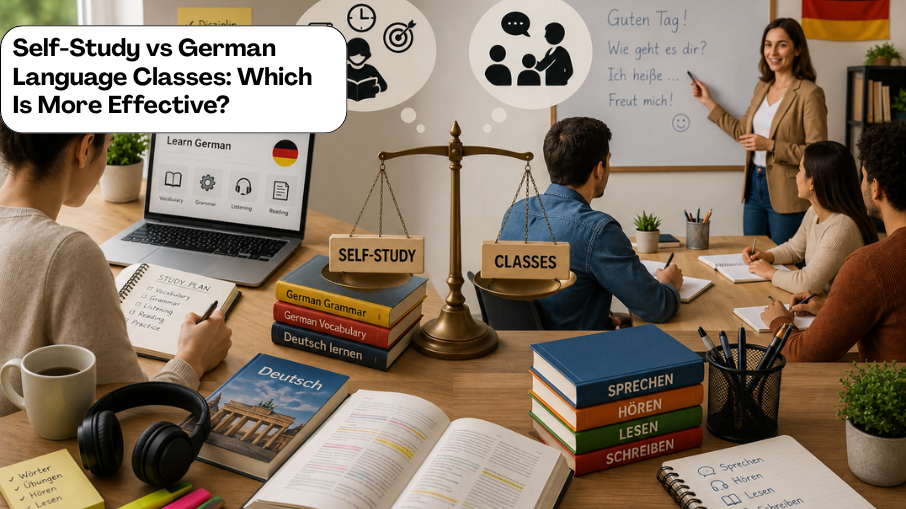
For most learners aiming to reach a real, usable level of German, structured classes are more effective than self-study. Classes offer expert guidance, regular speaking practice, accountability, and a clear path from A1 to advanced levels. Self-study works best as a supplement, or for highly disciplined learners with a lot of free time.
That said, the honest answer is “it depends,” and the rest of this guide shows you exactly what it depends on.
What Does Self-Study Involve?
Self-study means learning German on your own, using tools like mobile apps, textbooks, grammar guides, online videos, podcasts, and free websites. You set your own schedule, choose your own materials, and progress at your own pace.
Advantages of Self-Study
- Low cost: Many apps and resources are free or cheap, which is easy on the budget.
- Full flexibility: You study whenever and wherever you like, with no fixed timetable.
- Self-paced: You can slow down on tricky topics and speed through easy ones.
Limitations of Self-Study
- No expert feedback: Mistakes in grammar and pronunciation often go unnoticed and become hard habits to break.
- Little speaking practice: Apps rarely give you a real conversation partner, and speaking is where most self-learners get stuck.
- Motivation dips: Without a teacher, classmates, or deadlines, it’s easy to lose momentum and quietly give up.
- No clear structure: Jumping between random resources can leave big gaps in your foundation.
What Do German Language Classes Offer?
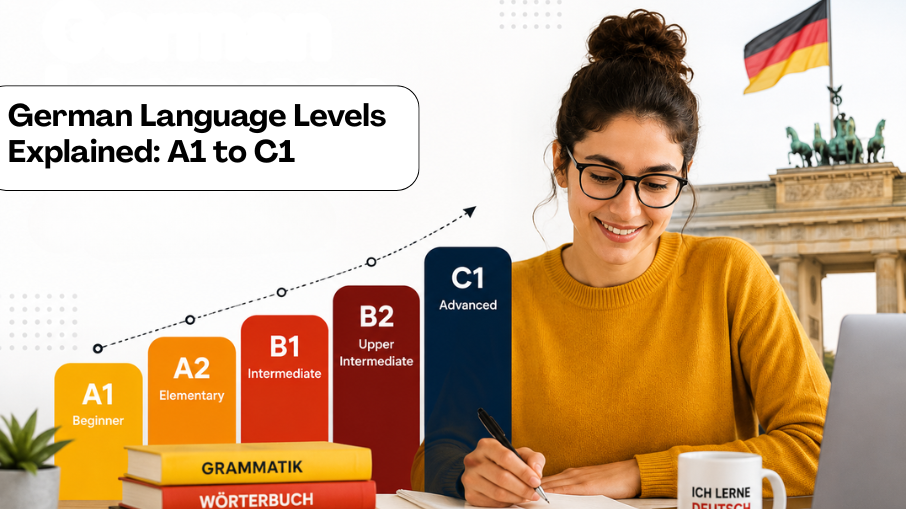
A structured German class puts you in a guided programme led by a trained teacher, with a set curriculum, regular practice, and a group of fellow learners. Classes can be in-person or online, and they follow the CEFR levels (A1, A2, B1, and up) so your progress is measurable.
Advantages of German Classes
- Expert guidance: A teacher corrects your grammar and pronunciation on the spot, so you learn it right the first time.
- Real speaking practice: Role-plays, discussions, and partner work build the confidence to actually talk, not just read.
- Structured progress: A clear syllabus takes you step by step from beginner to advanced, with nothing important skipped.
- Accountability and motivation: Fixed class times, homework, and classmates keep you consistent, which is half the battle.
- Exam readiness: Classes prepare you for recognised certifications like Goethe or telc, which matter for study and jobs.
Things to Keep in Mind
- Cost: Quality classes are an investment, though the results usually justify it.
- Fixed schedule: You commit to set timings, which asks for a little planning around work or studies.
Self-Study vs Classes: A Side-by-Side Comparison
Here’s how the two options stack up on the factors that decide whether you actually reach fluency.
- Guidance: Self-study leaves you on your own; classes give you an expert to correct and support you.
- Speaking practice: Limited in self-study, built-in with classes.
- Structure: Often scattered in self-study, clearly mapped in classes.
- Motivation: Depends entirely on you in self-study, reinforced by teachers and peers in classes.
- Cost: Cheaper for self-study, an investment for classes.
- Results: Slower and less consistent for most self-learners, faster and more reliable with classes.
Which Option Is Right for You?
The best choice comes down to your goals, your discipline, and how much time you have.
Self-study may suit you if:
- You’re highly self-disciplined and can stay consistent without external push
- You only want basic phrases for travel or personal interest
- You’re on a tight budget and have plenty of free time
German classes are the better fit if:
- You want to reach a real, usable level of German and speak with confidence
- You need a certification for study, a visa, or a job
- You want structured lessons, feedback, and steady motivation
- You’ve tried self-study before and lost momentum
For most serious learners, a smart approach is to make classes your backbone and use self-study tools to practise between sessions. You get the structure and feedback of a course, plus the flexibility of learning on your own time.
Start Your German Learning Journey with ASAP German Language Institute
Mastering German becomes easier when you have expert guidance, a structured curriculum, and continuous support. At ASAP German Language Institute, our German courses are designed to help beginners build a strong foundation while developing confidence in speaking, reading, writing, and understanding the language. With experienced trainers, interactive classes, and practical learning methods, you’ll stay motivated and make steady progress toward your language goals.
Ready to begin? Enroll today or learn more about our German language courses by visiting our website or calling us at +91-9209203333. Our dedicated trainers are always available to guide you at every stage of your German learning journey.
Stay connected with us for German learning tips, course updates, and useful resources:
- Facebook: https://www.facebook.com/asapgerman
- Instagram: https://www.instagram.com/asap_german.com_
- Website: https://www.asapgerman.com/
Have questions about our German language courses, CEFR levels, or admissions? Send us a WhatsApp message, and our expert counselors will be happy to help you choose the right course and answer all your queries.
Frequently Asked Questions (FAQ)
1.Can I learn German fluently through self-study alone?
It’s possible but difficult. Self-study can build vocabulary and reading skills, but reaching fluency, especially in speaking, usually needs regular practice, feedback, and structure that classes provide.
2.Are German language classes worth the cost?
For most learners, yes. Classes deliver faster, more reliable progress, expert correction, and exam preparation, which saves time and prevents bad habits. The results generally outweigh the fees.
3.How long does it take to learn German with classes?
With regular classes, many learners complete each level (A1, A2, B1) in roughly two to three months per level. Consistency and practice between sessions speed things up.
4.Can I combine self-study with classes?
Absolutely, and it’s often the best approach. Use classes for structure, feedback, and speaking, then reinforce with apps, podcasts, and reading in your own time.
5.Which option is better for exam preparation like Goethe or telc?
Classes are far better for exam preparation. They follow the official syllabus, offer mock tests, and give targeted feedback, which greatly improves your chances of passing.